
Abstract illustrations: shapes, lines and colours
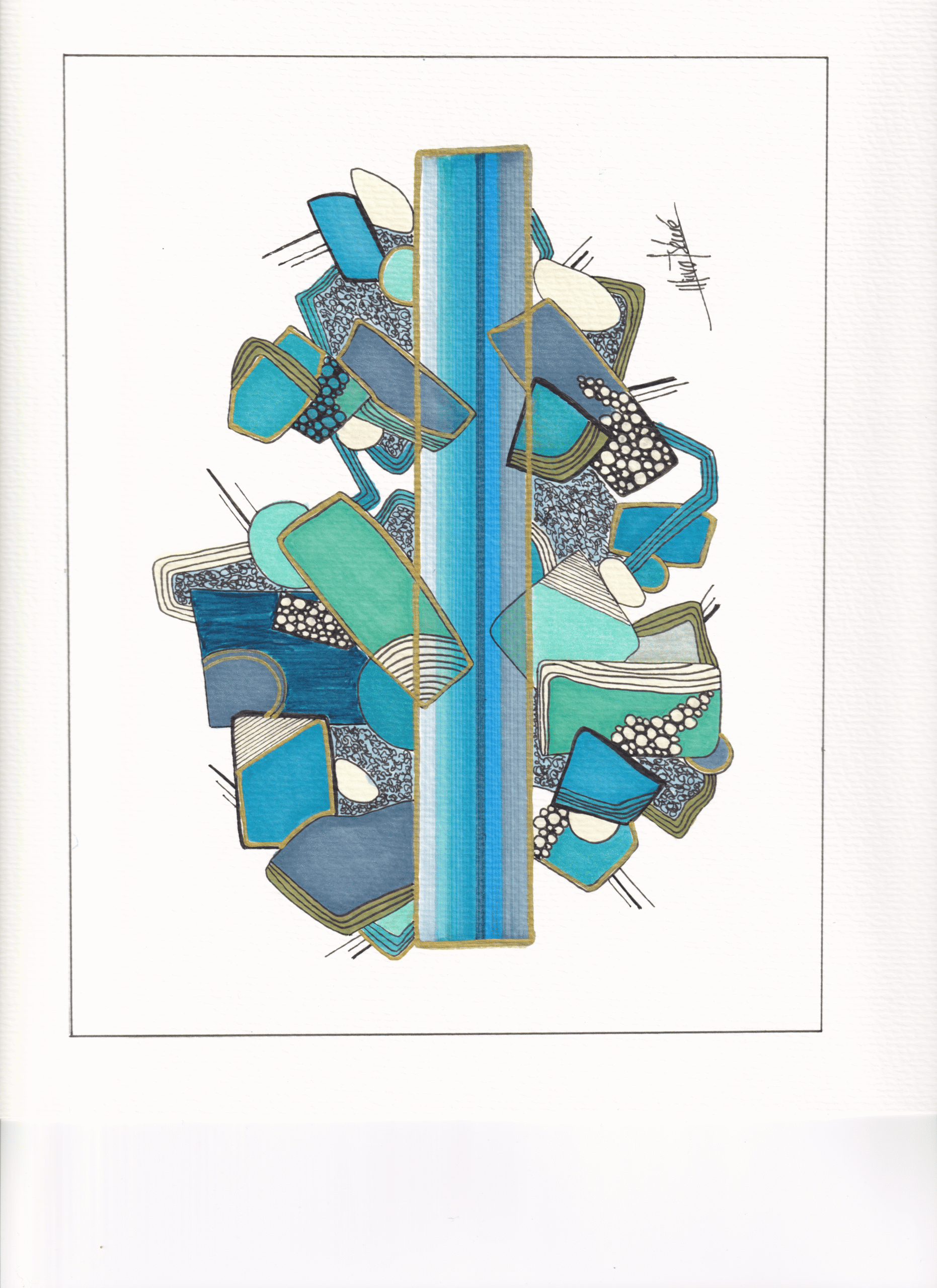
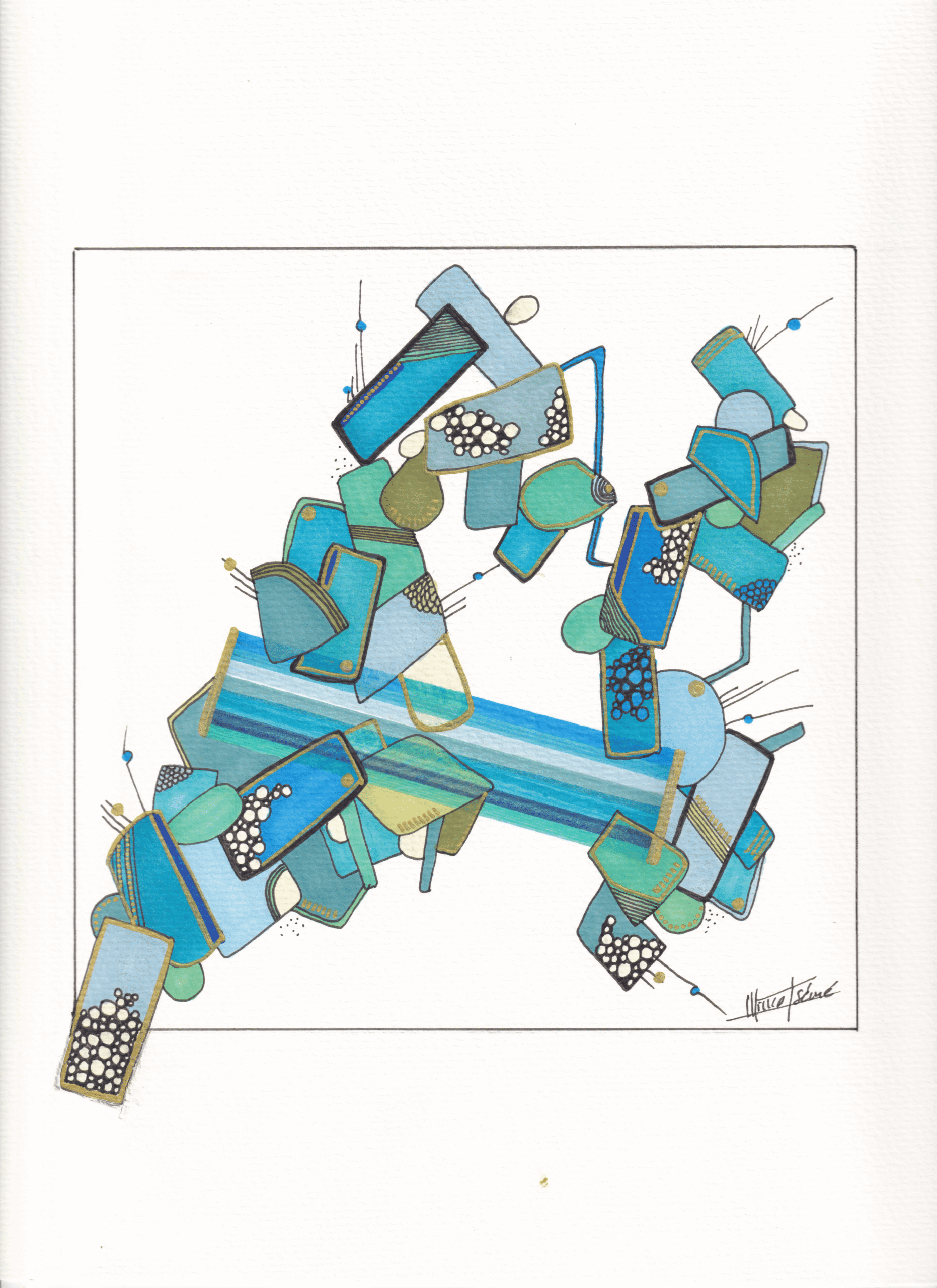
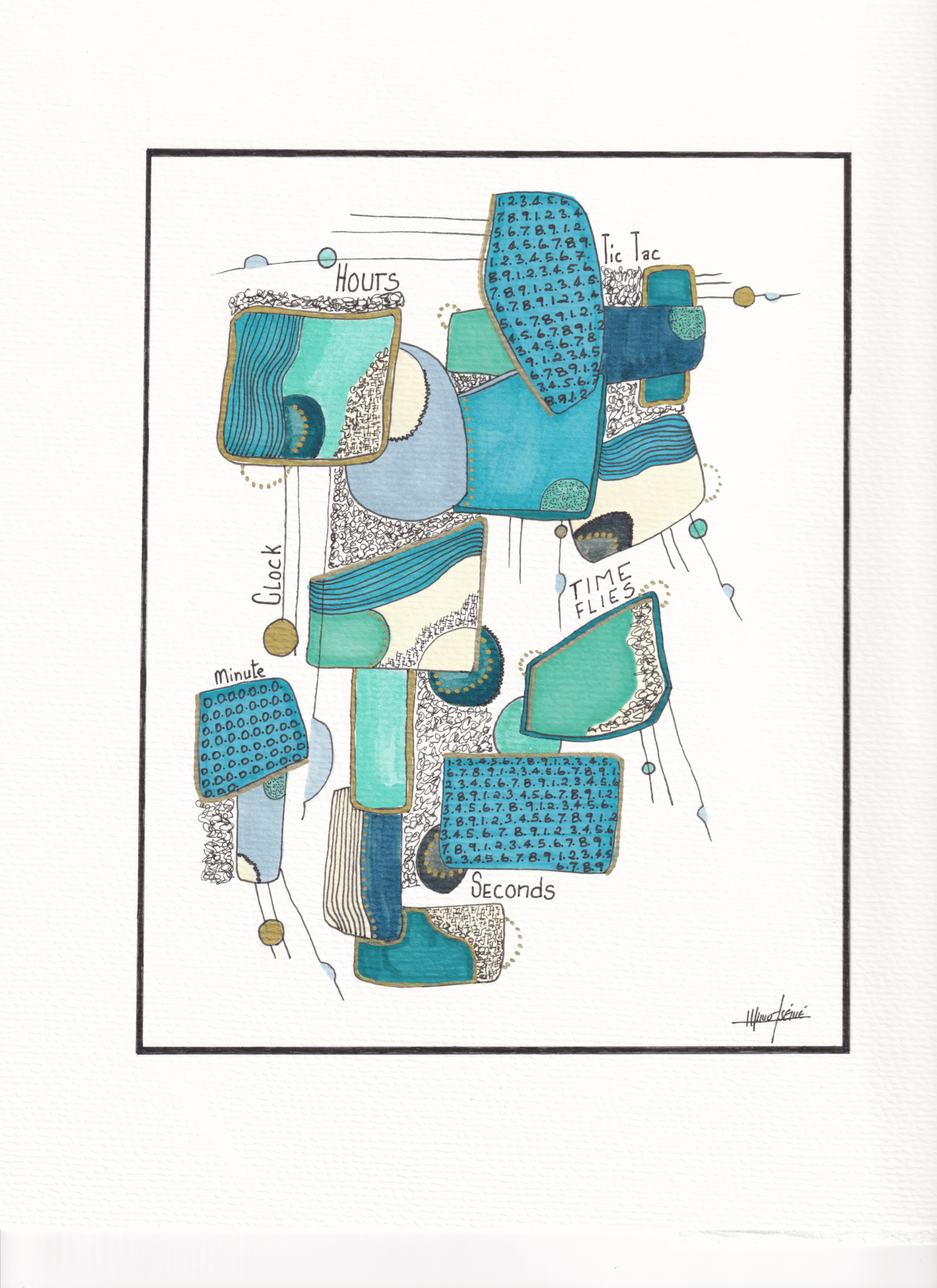
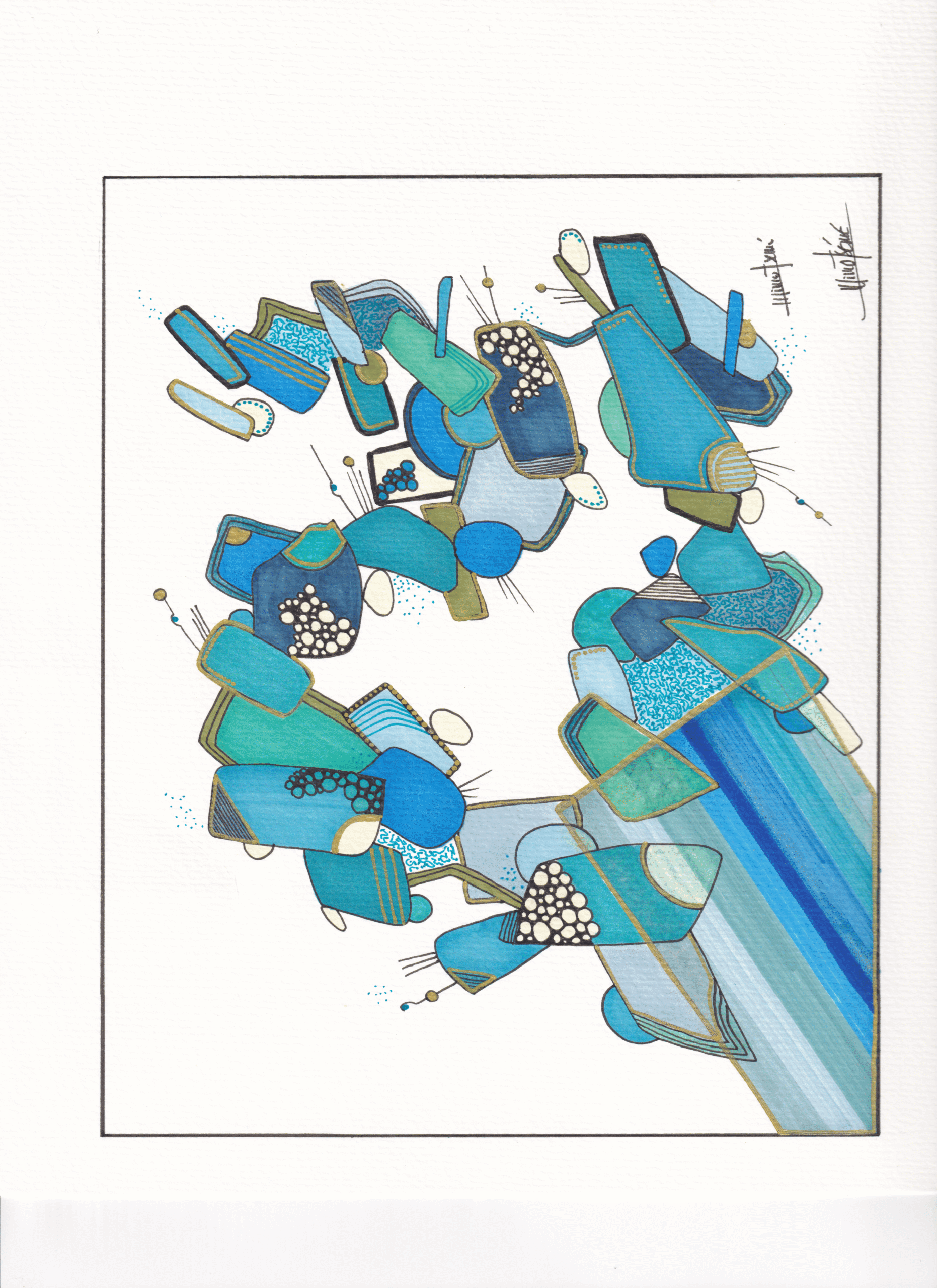
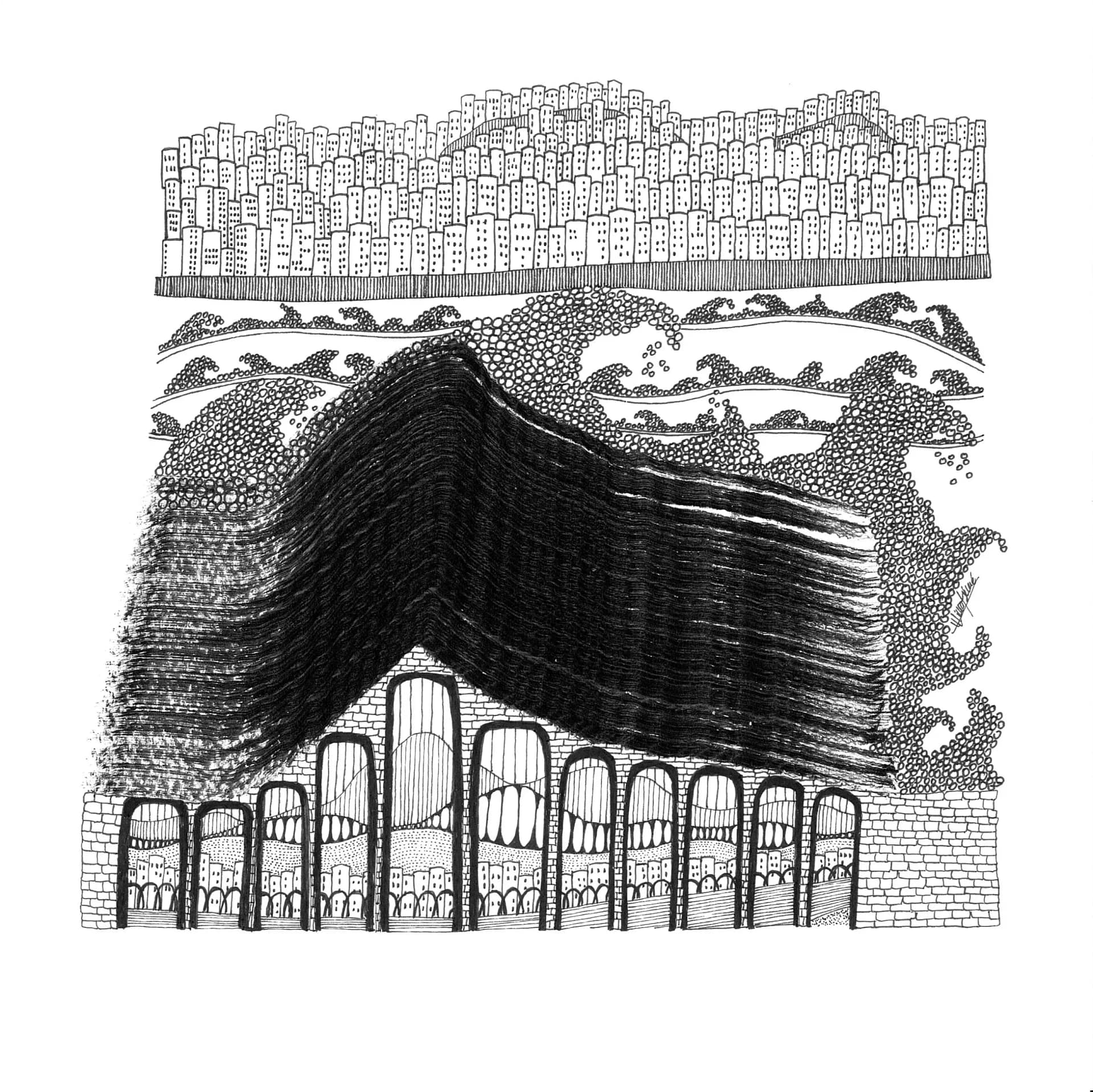
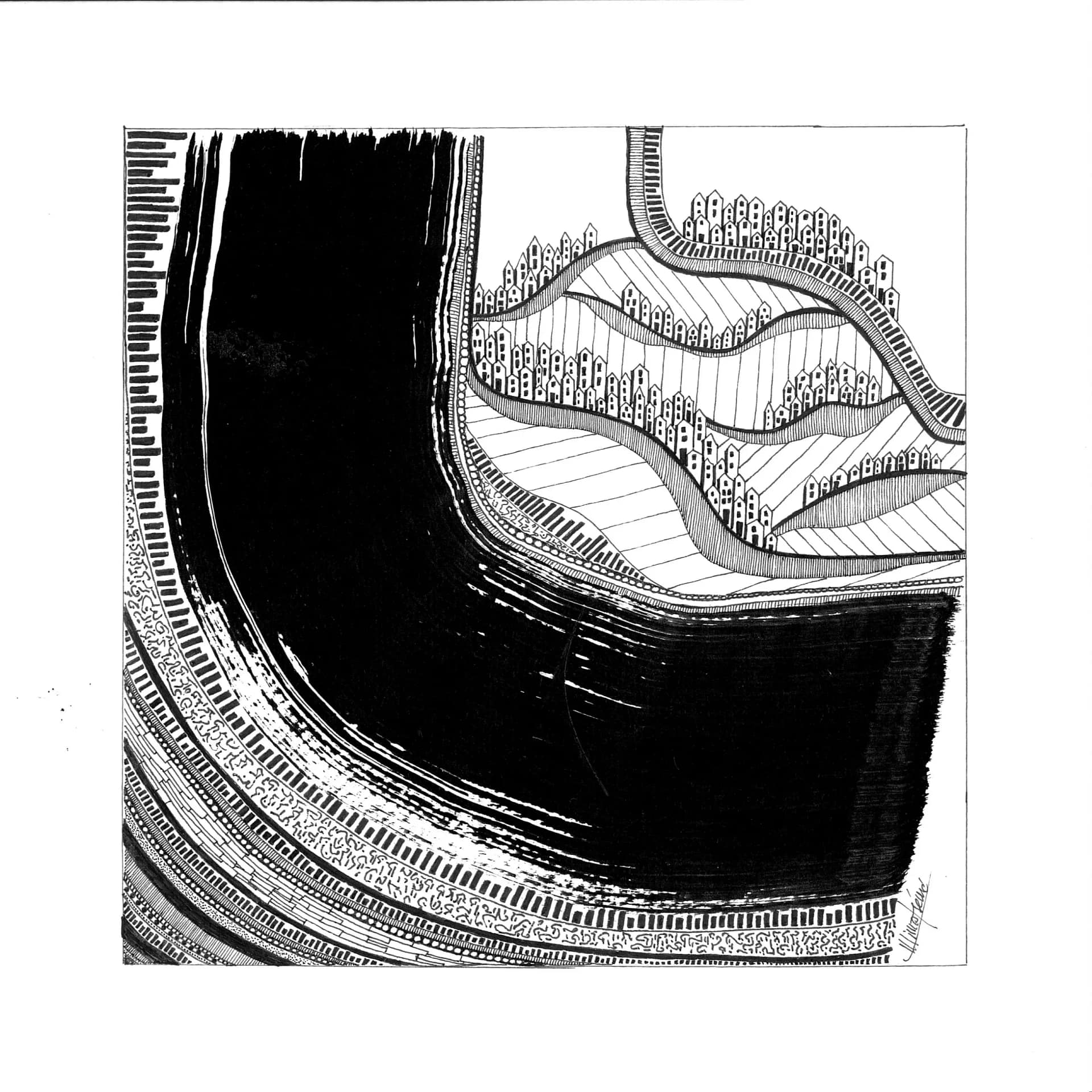
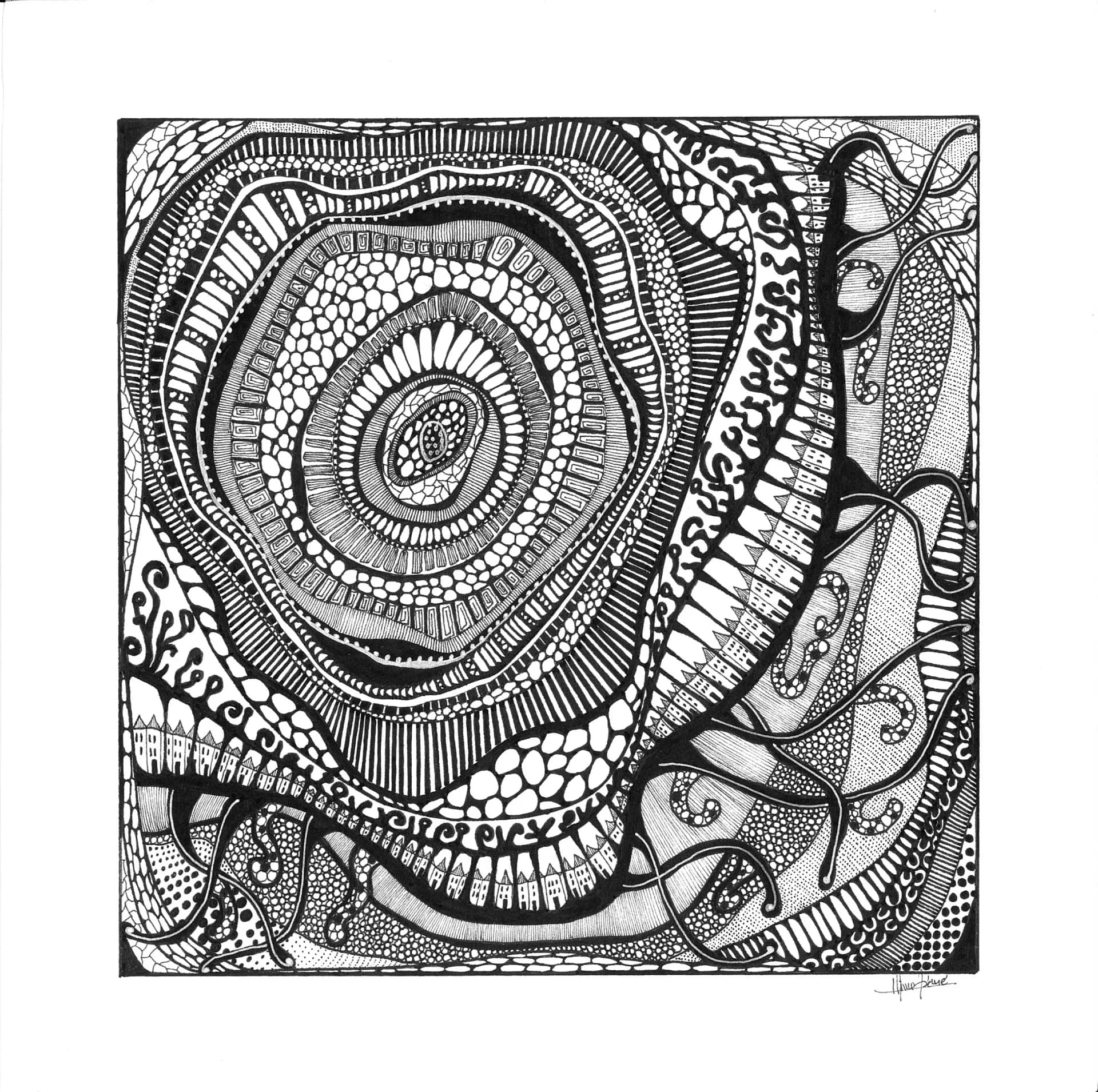
The abstract works by Tenzin Tsémé explore another side of her graphic universe. Here, architecture fades away to give more space to shapes, lines, patterns and colour.
The compositions are built freely, through layers and associations: flat aeras of colour, black outlines, geometric or organic shapes, meticulous details and areas deliberately left quieter. Each element gradually finds its place until it creates a balance unique to the work
Some creations favour black and white and the repeated lines, while others play with shades of blue, turquoise, orange or more natural tones. The techniques and rhythms vary from one series to another, whilst retaining the love of drawing, detail and structure that runs through the whole of Tenzin Tsémé's work.
These works do not seek to depict a specific place or subject. Rather, they invite the viewer’s gaze to wander through the composition, to linger on a motif, a texture or a colour, and to let everyone interpret it in their own way.
An overview of Tenzin Tsémé’s abstract illustrations
The collection brings together abstract illustrations from diverse worlds, where lines, shapes, patterns and colours come together. Some compositions explore layering and repetition, whilst others give the paper more breathing space and favour large, colourful shapes.
Browse the gallery and discover the various series, ranging from meticulous drawing to more free-flowing compositions.
Start or grow your collection
An abstract work can be chosen for its own sake, but can also become the starting point for a personal collection. Tenzin Tsémé’s abstract illustrations can complement one another through their colours, shapes, patterns or the way they occupy space.
As new series are released, you can gradually build a coherent collection, by bringing together several works based on a colour palette, a visual rhythm or simply your personal favourites.
Shapes, colours and rhythm in abstract art
In an abstract work, the viewer’s gaze is no longer guided by the immediate recognition of a landscape, a building or a figure. The shapes, colours, lines and their arrangement become the subject of the composition in their own right.
This freedom opens up a wealth of possibilities. A line can create movement; repetition can establish a rhythm; and two colours can alter the way they are perceived when placed side by side. Geometric shapes can structure space, whilst freer elements break up this organisation.
This research spans the history ofabstract art. Artists such as Sophie Taeuber-Arp explored the relationships between geometric shapes, colours and rhythm to create compositions in which visual balance became essential. The Centre Pompidou now preserves and documents a significant part of this history.
In my own abstract works, this creative process involves drawing and experimentation. I might start with a shape, a line or a colour palette without knowing in advance what the final composition will be. Elements are added, layered interacting with one another until a balance emerges.
I also like to combine highly detailed areas with simpler spaces. Details need breathing space: an accumulation of lines or patterns often becomes stronger when it enters into a dialogue with a calmer surface.
Depending on the series, this research can take very different directions. Some compositions favour geometric forms and contrasts; others become more organic, freer or more colourful. It is precisely this possibility of changing visual language while keeping drawing as a common thread that interests me in abstraction.
Series that continue to evolve
The abstract works provide a constantly evolving canvas for experimentation. New colour combinations, interplay of lines, layering, patterns and techniques: each series offers the opportunity to explore a different direction whilst retaining Tenzin Tsémé’s graphic identity.
The gallery will thus gradually be enriched with new works and new series, ranging from highly graphic compositions to freer, more colourful designs.
Continue the tour with the towns and villagesand affiches illustrées and the square-format illustrations, or find Tenzin Tsémé's various graphic universes on the page Illustrations page.